A feeding tube helps — it feeds through the stomach.
But it also changes how the entire body works.
Even when the surgery went well.
Even when the skin healed.
Even when the button looks calm.
There is a hidden problem most families are not told to look for:
a feeding tube always leaves a scar.
Not only on the surface.
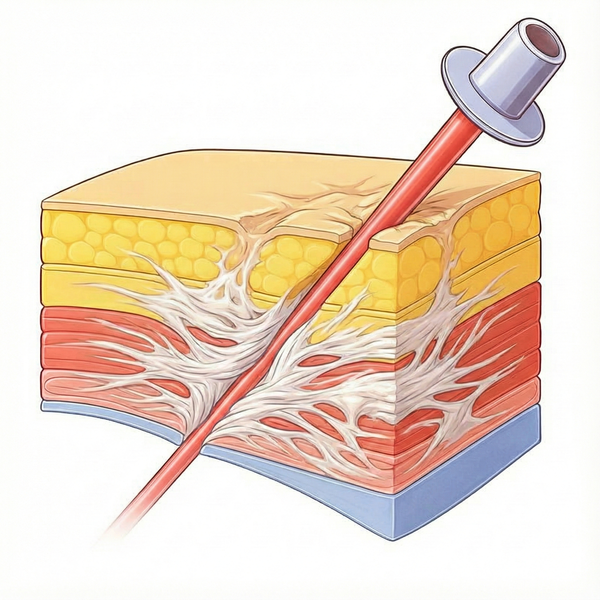
The tube passes through the skin and into the abdominal layers underneath.
These layers are supposed to slide, adapt, and move with breathing, posture, digestion, and daily movement.
But when the body heals around the tube pathway, those layers become fixed.
The outside may look small.
But inside, the body may begin adapting around a deeper scar.
This can help explain why some children still struggle with:
- reflux, burping, gas, or bloating that never fully settles
- weight gain that remains difficult despite careful feeding
- less comfort when sitting or being upright
- shallow or effortful breathing
- more stiffness, arching, tension, or fatigue
- a button area that needs constant care or protection
When feeding improves, but other things still feel wrong.
Many parents describe the same strange pattern:
“The feeding itself improved, which is great — but other things now feel off”
Sometimes it is reflux, gas, or burping that should have improved, but didn’t.
Sometimes it's a body that feels stiffer despite the lesser feeding struggle.
Sometimes sitting upright becomes uncomfortable.
Sometimes there is more crying, arching, tension, or unexplained discomfort.
When this happens, families are usually told to look at food, formula, medication, timing, or digestion.
Those things matter.
But there is another question worth asking:
Could the tube be affecting more than feeding?
Take the Tube Feeding Made Better Questionnaire
This short questionnaire is not a diagnosis.
It is a simple 10-question reflection to help you notice whether your child’s current discomforts may match patterns often seen when the tube, the button area, the abdomen, breathing, posture, or hidden scarring are involved.
When you complete the questionnaire, you will also receive our free guide:
Real Tube-Feeding Stories & Hidden Lessons From Experienced Families
These stories show how small details can change everything:
- a tube that sits slightly too deep
- a button that looks similar but behaves differently
- air trapped in the feeding line
- food texture that changes tolerance
- a stoma that needs a different kind of care
- a scar that changes again years later
Tube feeding families notice things that no manual explains.
Start with the questionnaire.
Then receive the stories and look at your child’s tube-feeding reality with fresh eyes.
Tube Feeding Made Better (TFMB) is an educational, home-based project for PEG / G-tube families.
It focuses on comfort, breathing, abdominal function, and the hidden structural effects of tube-related scarring.
TFMB does not replace your medical team. Always contact your doctor or nurse for urgent tube problems, infection, bleeding, pain, displacement, respiratory distress, or any acute medical concern.